German AVIA B-71A VG+BZ
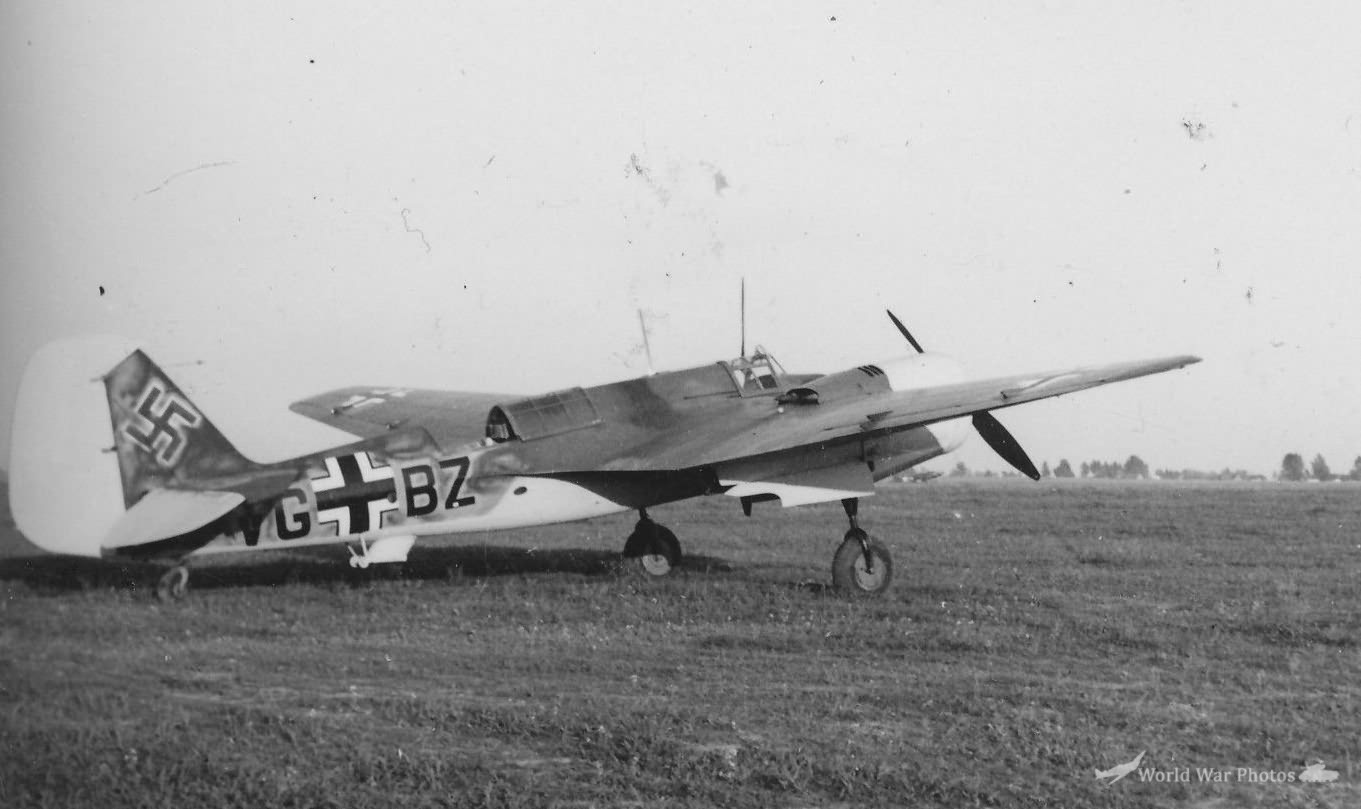
German AVIA B-71 VG+BZ
The integration of the Avia B-71, the Czechoslovak-licensed version of the Tupolev SB, into the Luftwaffe represents a significant instance of German forces utilizing high-quality captured aviation assets for specialized secondary roles. Following the occupation of Czechoslovakia in March 1939, the Luftwaffe seized 59 serviceable B-71 aircraft, all of which were of Soviet production.
Initial Acquisition and Testing
Immediately following the seizure of these assets, the majority of the airframes were ferried from Czechoslovak bases to Merseburg, Germany, for storage. The Luftwaffe allocated one specific unit, serial number B.71-2, to the Test and Evaluation Center at Rechlin in April 1939 for extensive engine and flight trials that continued through June of that year. While some airframes were eventually sold to Bulgaria or transferred to the Slovak Air Arm, the Luftwaffe retained a significant number for its own operational needs.
The B-71A Target Tug
The Germans found the B-71 ideally suited for target-towing duties and ordered the conversion of airframes into the B-71A variant. This modification involved several structural and equipment changes:
- Armament Removal: All defensive machine guns were deleted.
- Glazing Modifications: The center section of the nose glazing was covered with metal sheeting.
- Target Equipment: The former bomb bay and lower gun station were occupied by target-towing equipment, including a winch, a drum with 2.5mm diameter cable, and a 3-meter canvas target sleeve.
- Communication: A fixed radio antenna was installed atop the fuselage, and a rear-view mirror was mounted on the cockpit canopy frame.
These aircraft were primarily assigned to Luftdienst-Kommando 1/7 and Luftdienst-Kommando 6, where they performed target towing and meteorological flights.
The B-71B Improved Target Tug
Appearing in 1940, the B-71B was an upgraded version designed to provide more space for the towing mechanism and its operator. Key improvements included:
- Extended Cable: The target towing cable was lengthened to 1,000 meters.
- Structural Changes: The cockpit canopy was moved forward, and the cable operator's station was relocated to the rear fuselage.
- Underwing Pylons: Six pylons were installed under the wings—three on each side—to carry additional equipment.
- Antenna: This variant was characterized by a distinctive T-shaped antenna mast mounted atop the fuselage.
Clandestine and Training Roles
Beyond target towing, the B-71 saw service in more specialized capacities. From 1941, the Abwehr (German military intelligence) utilized B-71s for reconnaissance missions and for parachuting saboteurs into Soviet territory. The choice of the B-71 for these clandestine operations was strategic; its silhouette remained familiar to Soviet observers, potentially delaying identification by VVS forces. Additionally, B-71s were utilized for advanced pilot instruction by units such as Jagdfliegerschule 4 and were even operated by the secret unit Kampfgeschwader 200 (KG 200).
Visual Identification and Camouflage
Most B-71As were finished in the standard Luftwaffe camouflage scheme consisting of RLM 70 Black Green and RLM 71 Dark Green upper surfaces with RLM 65 Light Blue undersurfaces. From mid-1940, the Hakenkreuz (swastika) was moved from the rudder to the vertical fin, and standard Stammkennzeichen (factory radio codes) were applied to the fuselage and wings.
Service Decline
The B-71 enjoyed a relatively long career in Luftwaffe service due to its robust all-metal construction and reliable performance. As late as March 1944, the Luftwaffe still reported 51 units in service. however, chronic shortages of spare parts led to a rapid decline in the type's availability; by September 1944, only nine aircraft remained operational.