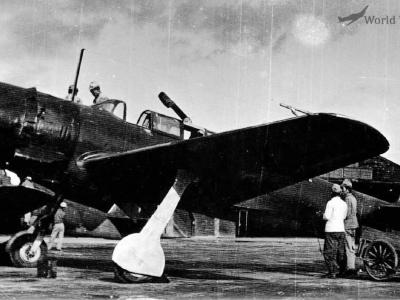
Nakajima C6N
Click the thumbnails to enlarge them
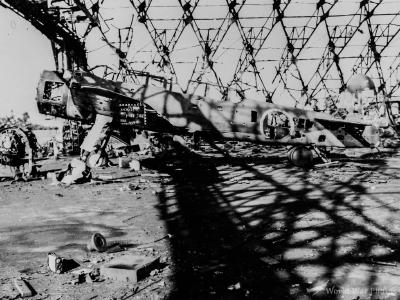
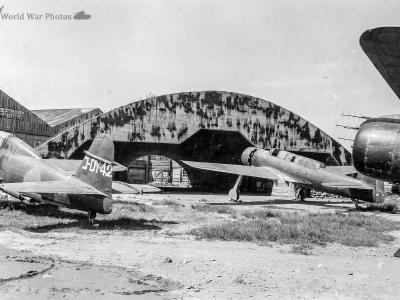
121st Kokutai Saiun in a hangar on Saipan
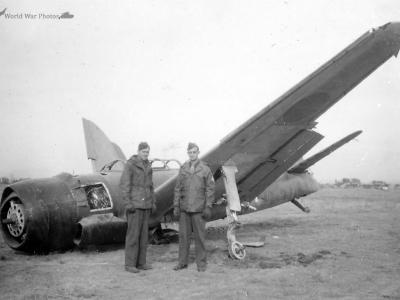
6th Army GIs next to wrecked Saiun
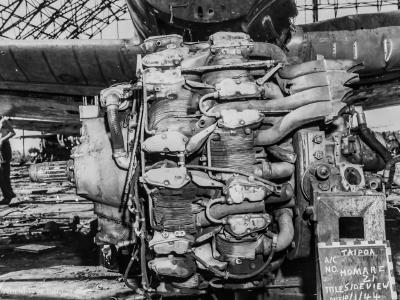
Air-cooled twin-row 18 cylinder radial NK9B Homare engine
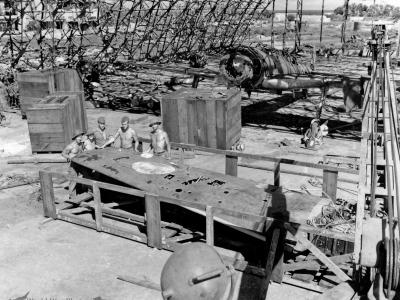
C6N Tinian Island 1944

C6N1 762-13 January 1945
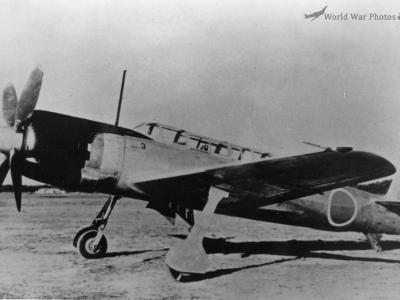
C6N1 prototype
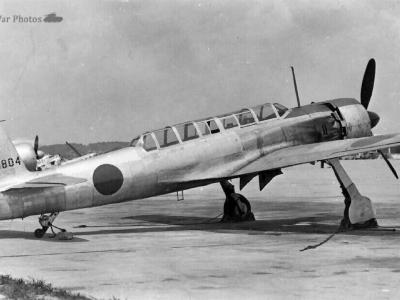
C6N1 Saiun T2-4804
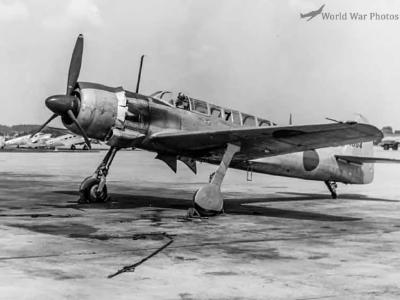
Captured Saiun in USA
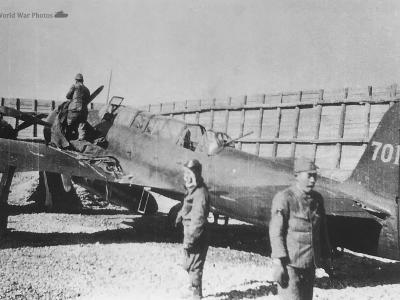
Saiun code 701-13
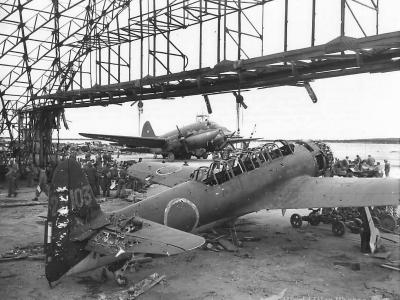
Saiun coded 21-103 of 121st Kokutai after capture on Tinian
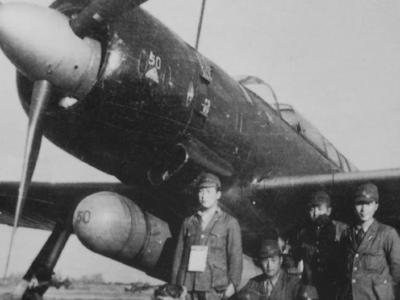
Saiun of the 762 Kokutai
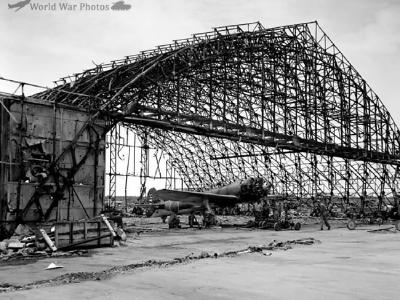
Wreck inside a hanger on Tinian, 1944
Yokosuka AB August 1945
The Saiun was a reconnaissance aircraft of the Imperial Japanese Navy that was in service from the second half of the Pacific War. It was the only shipboard reconnaissance aircraft developed exclusively for reconnaissance during World War II. The name “Saiun” refers to the rainbow-colored clouds, which is considered a good omen. Its codename by the U.S. military was “Myrt”. Nakajima began work on the prototype in June 1942. The prototype equipped with an Homare Model 11 was completed in 1943, but it did not meet the speed performance and other requirements, so an Homare Model 21 was installed and a laminar flow wing was adopted. The improved model recorded the highest speed of any aircraft in the Imperial Japanese Navy at the time, 639 km/h during testing. The Saiun is a sleek aircraft characterized by its straight and narrow fuselage, large-diameter propeller, and long main landing gear, and its design is characterized by its high-speed performance under the conditions of a ship-borne aircraft. In order to achieve high-speed performance, aerodynamic drag reduction was a priority, and the fuselage was designed in a straight configuration with the same diameter as the engine cowling to reduce the frontal projected area. Wings were designed with an aerodynamically superior laminar flow wing, which was not yet studied at the time, to reduce aerodynamic drag. In order to obtain the acceleration force needed to take off over a short distance as a shipboard aircraft, a long main landing gear was adopted to match the long-diameter propeller. The wings, which have a small wing area have leading edge slots and Fowler flaps to increase the wing loading at low speeds. The structure was simplified by not folding the main wings, and integral tanks were placed on 80% of the main wings, enabling the aircraft to fly 3,000 km without an additional tank. The initial mass-produced model was not equipped with any fixed armament, but the mass-produced model was equipped with a set of swivel machine guns on the rear seat, which were produced under license from the German MG 15 machine gun.