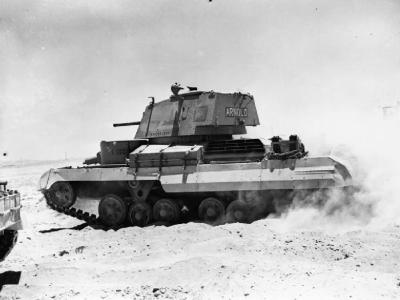
Cruiser Mk I A9
Click the thumbnails to enlarge them
A9 of the 1st Armoured Division 2nd Armoured Brigade
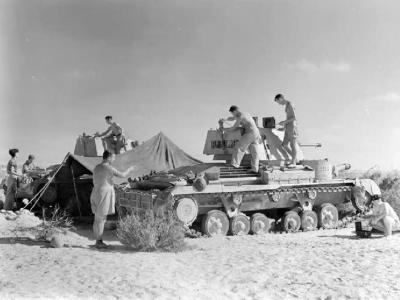
A9 of the 6th Battalion RTR, North Africa 1940-41
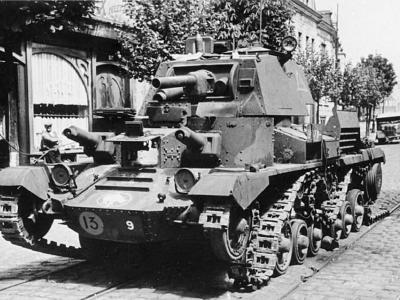
Abandoned A9 tank Calais 27 May 1940
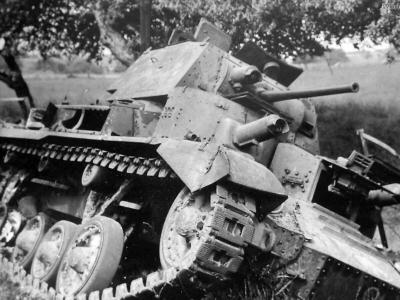
Abandoned A9, France 1940
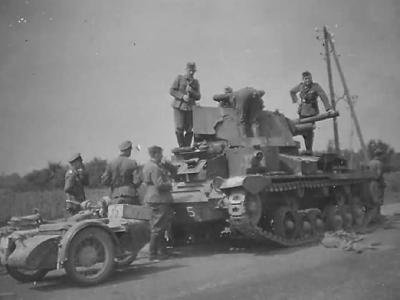
British tank A9 cruiser Mk I CS
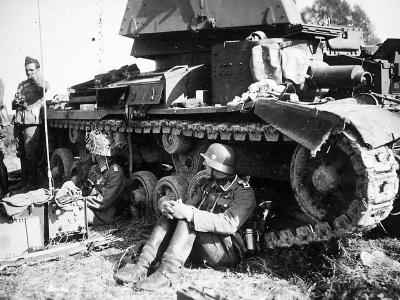
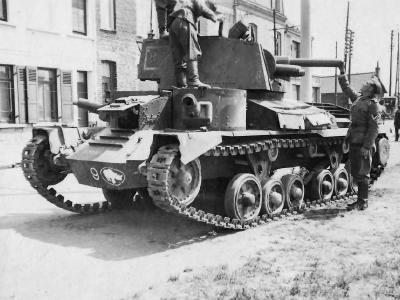
Cruiser tank Mk I A9 and wehrmacht radio team

Damaged A9 CS, France 1940
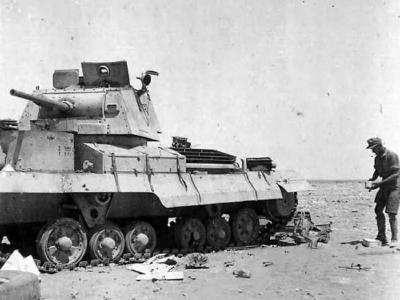
Destroyed A9, North Africa
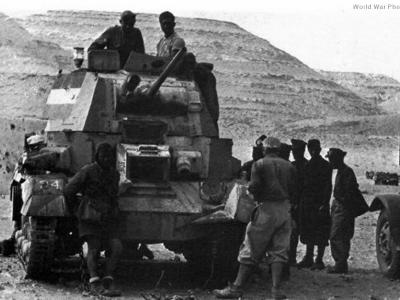
Italian A9, North Africa 1941
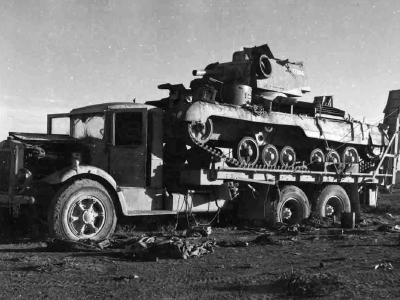
Mack EXBX 18-ton 6x4 tank transporter with Cruiser Mk I CS, A9 tank
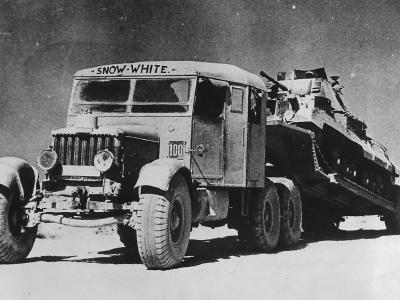
Scammell Pioneer tank transporter named "Snow White" with A9 tank, 1941
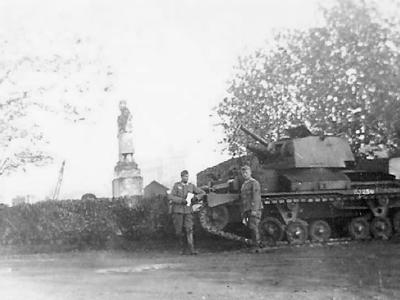
Tank A9 Cruiser Mk I
A9 was designed by Sir John Carden in 1934, as the successor Vickers Mark II. Trials started in 1936, and production in 1937. 125 tanks were built in total, and saw service from 1938-41. It was the first British tank fitted with a central turret, but it was not particularly successful design or modern, and the tank was very poorly armored (only 14 mm). The weight of the A9 being relatively low allowed it to be powered by a commercially available 9.64 litre AEC bus engine, which gave it a top speed of 40 km/h. It also had a distinctive “slow-motion” suspension system with the triple-wheel bogies on springs mounted with Newton hydraulic shock absorbers. It was armed with a 40 mm (2-pdr) main gun and three machine-guns, one coaxial in the main turret and the other two in separate auxiliary turrets, and it was the first British tank with an hydraulic-powered turret traverse. Combat experience in France in 1940 and North Africa proved that the design had critical drawbacks: it was just too slow, mechanical unreliability and thinly armoured when confronted by contemporary German tanks. Specifications:
|
version |
Cruiser Tank Mk I, A9 |
|
crew |
6 |
|
armor |
hull:5 - 14 mmturret:4 - 14 mm |
| main armament | 2pdr OQF (40mm) 100 rounds |
| secondary armament | 3 x Vickers 7,92 mm, 3000 rounds |
|
weight (kg) |
13000 |
|
length (mm) |
5791 |
|
width (mm) |
2501 |
|
height (mm) |
2653 |
|
engine |
AEC Type 179, 150 hp at 2200 rpm. 6 cylinder, liquid cooled, gasoline |
|
range on road (km) |
241 |
|
speed (km/h) road/off road |
40/24 |
|
trench crossing (mm) |
|
|
vertical obstacle (mm) |
610 |
|
fording ability (mm) |
910 |
| serial numbers | T3493 - T 3542 and T7196 - T7270 |